Mapping the Invisible Needs of Campus Life
Participatory co-design research exploring how students and faculty experience dignity and comfort in everyday campus life.
The Challenge
Universities provide wellbeing services, career support, and learning resources, but students rarely experience these as a connected system. Rather than starting with a predefined problem, I wanted participants to surface their own concerns in their own language, mapped to the specific places where those experiences happen.
Method
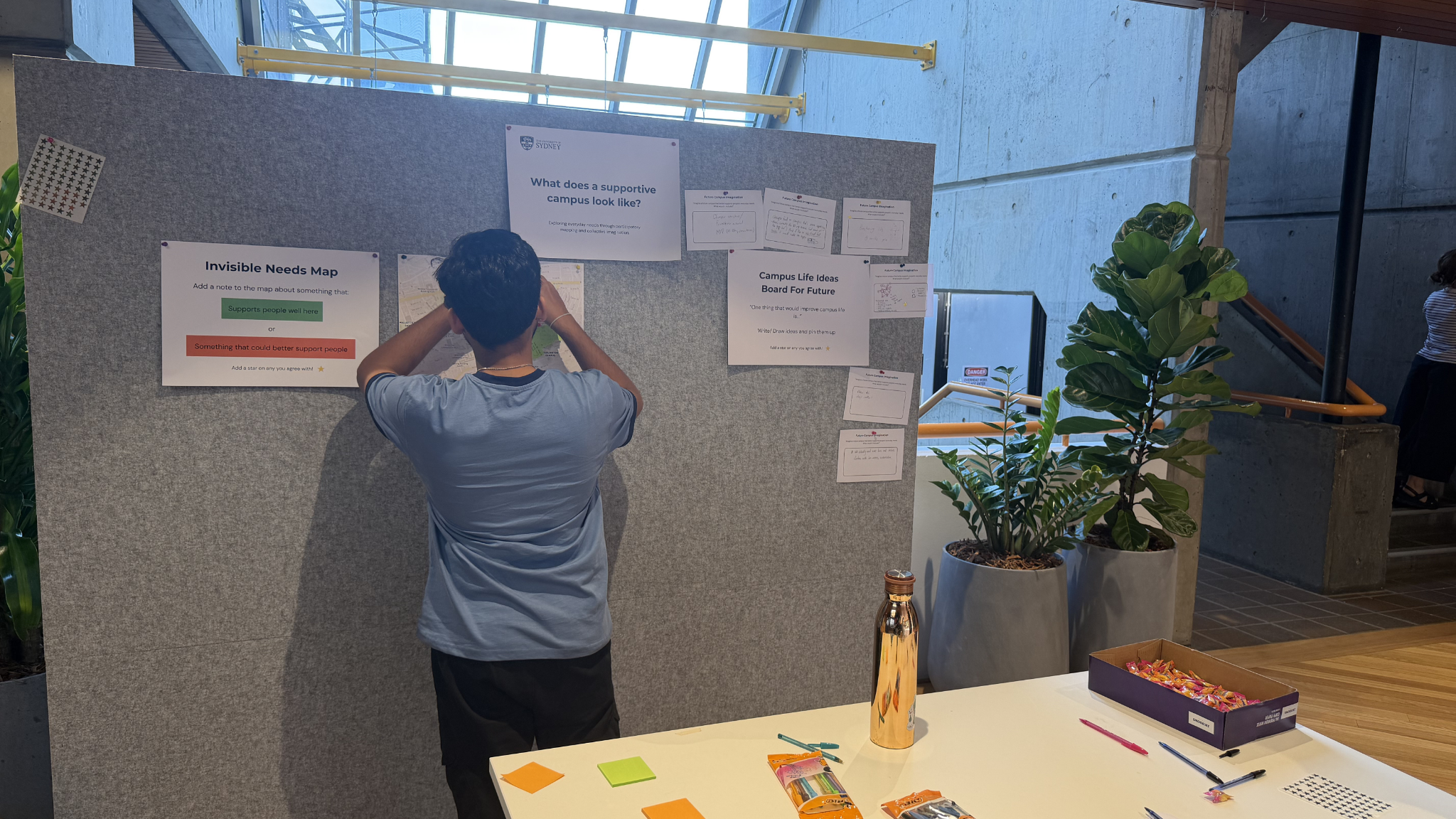
I designed and ran a 2-hour participatory pop-up in the Wilkinson Building lobby, engaging 20+ students and faculty across two generative activities and a voting mechanism built for low-barrier engagement.
Invisible Needs Map
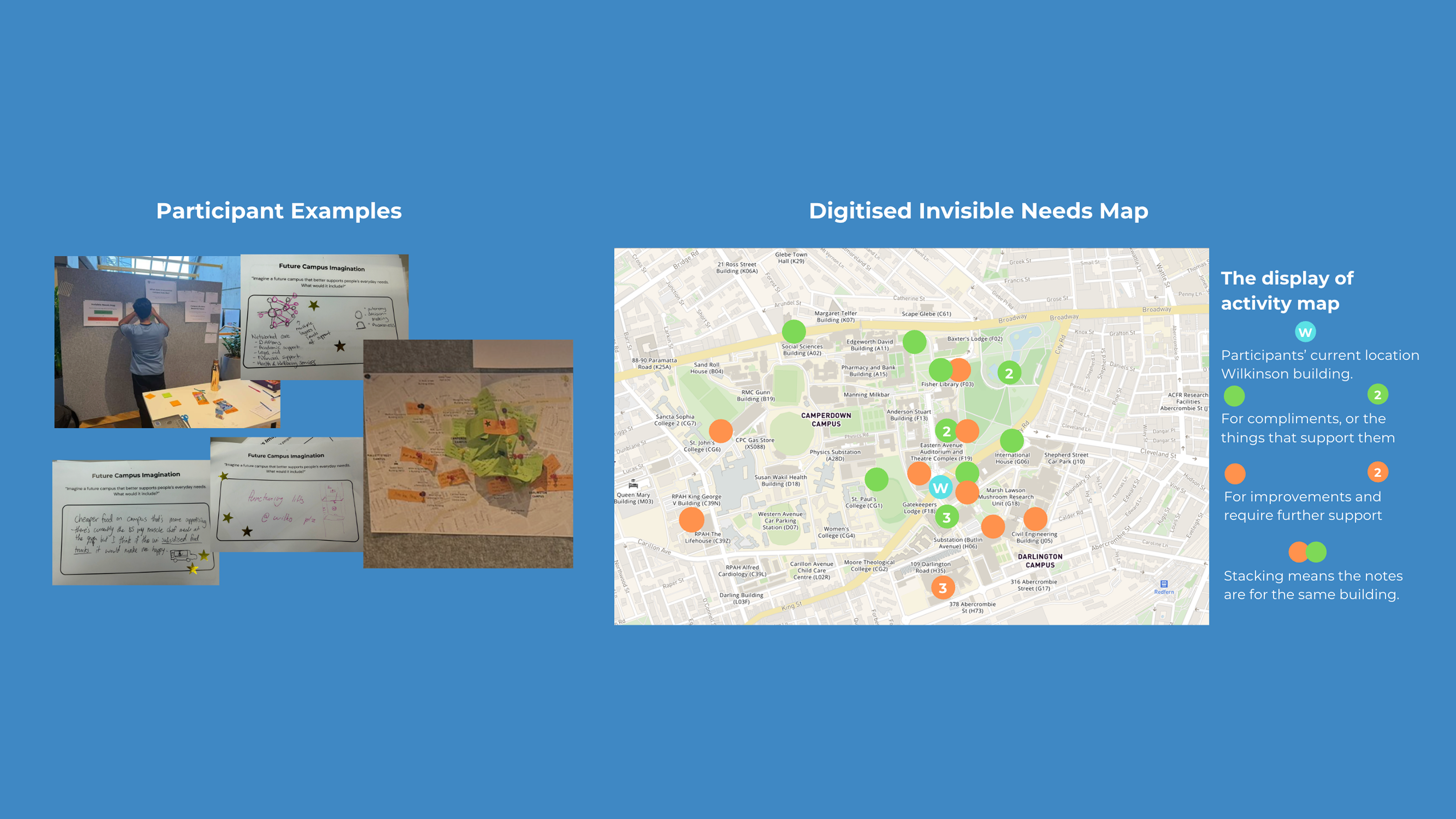
Colour-coded sticky notes (green for support, orange for improvement) pinned to the relevant campus location on a physical map.
Future Campus Imagination
Open prompt: "Imagine a future campus that better supports people's everyday needs." Participants wrote and drew ideas on generative cards.
Participatory Voting
Gold-star stickers on responses that resonated. Passers-by could contribute through voting alone. One action, no facilitation required.
Insights
Supported by people, let down by place
What supports students is human: warmth, community, belonging. What fails them is physical: seating, food cost, broken lifts. The campus is valued for how it feels but falls short on the basics that let people stay.
Services exist, the system doesn't
Wellbeing Centre, career hub, and learning hub each praised individually, but no one described them as connected. The most detailed response called for "networked care" across academic, legal, financial, and health support.
Small needs, shared by many
Functioning lifts, affordable food, sheltered seating. Things students absorb daily rather than escalate. Voting confirmed these as collective priorities, not individual complaints.
Reflection
This project is evidence of participatory research design, live facilitation with real stakeholders, and qualitative synthesis. The engagement was deliberately low-barrier: colour-coded notes, simple prompts, and a single-action voting mechanism meant passers-by could contribute in under a minute. That mattered because the people with the least time to participate are often the ones whose needs are least visible.
The insights inform ongoing generative co-design workshops exploring how digital platforms could make these invisible needs visible and actionable across campus systems.